Adze, Chisel, and Tide: The Last Wooden Boatbuilders Keeping Chiba's Maritime Soul Afloat
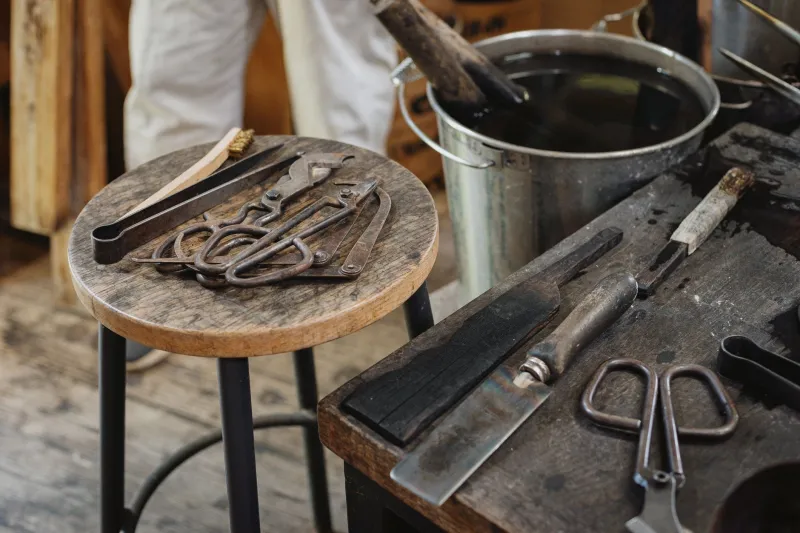
There's a particular sound that comes out of a traditional boatyard that you don't hear anywhere else. It's not quite a bang, not quite a knock — it's somewhere in between, the sound of a wooden mallet meeting a caulking iron, driving cotton fiber into the seam between two planks of Japanese cedar. If you stand in the right spot along the inner coast of Tokyo Bay, on the Chiba side where the land curves quietly away from the city's chaos, you can still hear it.
Not often. But still.
Chiba Prefecture doesn't tend to come up in conversations about Japanese maritime heritage. Most people outside Japan picture samurai, cherry blossoms, or neon-lit city blocks when they think of Japanese culture. But for centuries, Chiba's coastline — stretching along both Tokyo Bay and the Pacific-facing Kujukuri shore — was one of the most active boat-building regions in the entire country. The flat-bottomed bekabune, the slim tenmasen fishing skiff, the wide-bellied cargo haulers that moved rice and goods through the Edo waterway network — many of them were born in Chiba yards.
Today, the industry that once employed thousands has narrowed to a handful of workshops. And the people inside those workshops are acutely aware of what's at stake.
A Living Blueprint
Master shipwright Kenji Ōtake has been building wooden boats in his family's workshop near Funabashi for over four decades. He's in his late sixties now, with hands that look like they were carved from the same timber he works with every day. He doesn't use blueprints in the conventional sense. The design lives in his body — in the angle of his wrist when he shapes a rib, in the way he reads the grain of a plank before deciding which curve it wants to take.
"A blueprint tells you measurements," he said through a translator during a visit to the workshop. "But wood isn't a measurement. Wood is a living thing that already knows what it wants to be. You learn to listen to it."
This philosophy — the idea that the craftsman's role is to collaborate with the material rather than simply impose a design on it — is deeply rooted in Japanese woodworking traditions that date back to the Edo period (1603–1868). During that era, Chiba's boatyards supplied the watercraft that kept the Tokugawa shogunate's economy moving. Fishing boats fanned out into Tokyo Bay. Cargo vessels carried agricultural goods from the Kanto plains to Edo's markets. The builders who made those boats passed their knowledge down through strict apprenticeship systems — not through books, but through years of watching, doing, and getting it wrong under the patient eye of a master.
The Apprentice Problem
That transmission system is now the single biggest threat to the craft's survival.
Traditional boatbuilding apprenticeships in Japan historically required five to ten years of commitment before a student was trusted to work independently on a hull. That's a brutal ask in an era when most young people expect a career trajectory measured in months, not years. Wages during training are modest. The physical demands are real. And the endpoint — becoming a master of a craft that the broader economy has largely stopped valuing — doesn't exactly light up a LinkedIn profile.
Ōtake currently has one apprentice, a 26-year-old named Ryō who came to the workshop after burning out from a corporate job in Tokyo. Ryō is two years in, and by his own admission, still mostly sweeping sawdust and watching. He seems at peace with that.
"I didn't come here for speed," he said. "I came here because I wanted to make something that would still exist in a hundred years."
Several Chiba workshops have partnered with regional vocational schools and cultural preservation NPOs to try to formalize the apprenticeship pipeline. There are grant programs, sponsored residencies, and occasional media attention. It helps at the margins. But the numbers remain sobering — by most estimates, fewer than thirty active traditional wooden boatbuilders remain in all of Chiba Prefecture.
Heritage Meets Environmentalism
What's given the craft an unexpected second wind, interestingly, isn't nostalgia. It's sustainability.
Wooden boats built in the traditional Chiba style use sustainably harvested Japanese cedar, cypress, and zelkova. They require no synthetic resins, no fiberglass, no petroleum-derived materials. When they reach the end of their working life, they decompose. Compare that to the lifecycle of a modern fiberglass or aluminum hull — materials that will outlast their owners by generations and contribute to marine waste streams that are already a serious global problem.
A small but growing community of environmentally conscious fishermen and recreational boaters in Japan has started to rediscover traditional wooden vessels for exactly this reason. Some are ordering custom tenmasen skiffs for coastal fishing. Others are commissioning decorative or ceremonial boats for festivals and cultural events. A few international buyers — particularly from the US West Coast, where there's a dedicated wooden boat enthusiast community — have reached out to Chiba workshops after seeing their work featured in Japanese craft publications.
The Wooden Boat Festival held annually in Port Townsend, Washington draws thousands of enthusiasts from across North America. The aesthetic and philosophical values celebrated there — craftsmanship, material honesty, connection to water — align almost perfectly with what Ōtake and his peers have been practicing for their entire careers. The audiences exist. The bridge between them and Chiba's workshops is just still being built.
Why It Matters Beyond the Boat
It's easy to frame the story of Chiba's wooden boatbuilders as a tragedy-in-progress — a beautiful thing slowly going dark. And there's truth in that framing. But spend a few hours in Ōtake's workshop and a different feeling takes over.
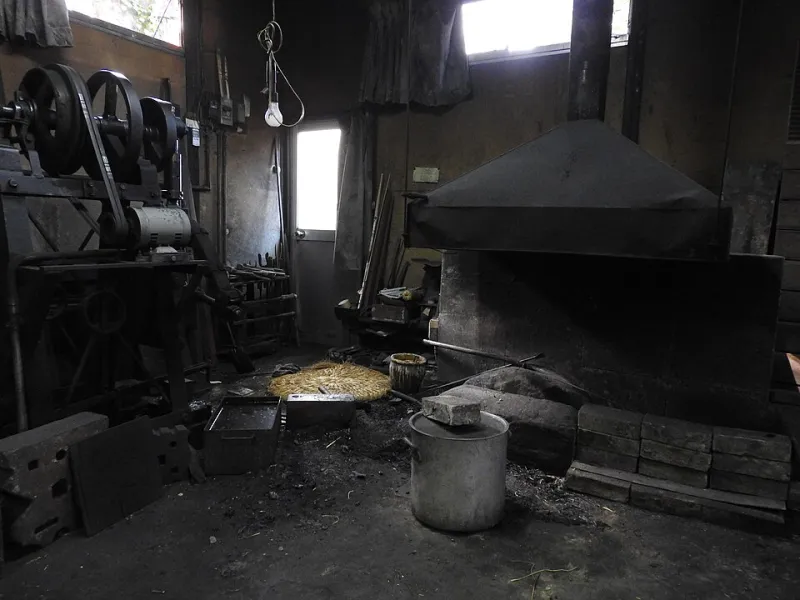
The smell of fresh-cut cedar is almost overwhelming in the best possible way. Sawdust catches the light coming through the open workshop doors. A half-finished hull sits on its cradle like something that's been interrupted mid-breath, waiting patiently to become what it's supposed to be. It doesn't feel like a museum. It feels like a place where something real is happening.
These boats, when they're finished, will go in the water. They'll get wet and smell like salt and carry people across bays and inlets the same way Chiba-built boats have been doing for four hundred years. That continuity — unbroken, physical, stubbornly present — is the thing that no amount of digital archiving or museum display can replicate.
The adze keeps swinging. The tide keeps coming in. For now, at least, the sound is still there if you know where to listen.