Salvage and Style: The Chiba Designers Turning Factory Castoffs Into Fashion Worth Coveting
Let's be honest: when most Americans think about Japanese fashion, they picture Harajuku. They picture the wild, maximalist street style that's been documented in a thousand travel blogs and breathlessly covered by Western fashion media for the past two decades. Tokyo gets the spotlight. Tokyo almost always gets the spotlight.
But there's something happening about thirty minutes east of all that noise that deserves a serious look.
In Chiba Prefecture — a place better known for its peanut farms, its airport, and its somewhat unfair reputation as Tokyo's less-glamorous neighbor — a loose network of independent fashion designers is building something genuinely new. They're working with materials that most of the industry throws away, applying craft traditions that go back centuries, and producing garments that are starting to turn heads in places like Los Angeles, Portland, and New York.
Nobody handed them a platform. They built it out of scraps. Literally.
The Waste That Started It All
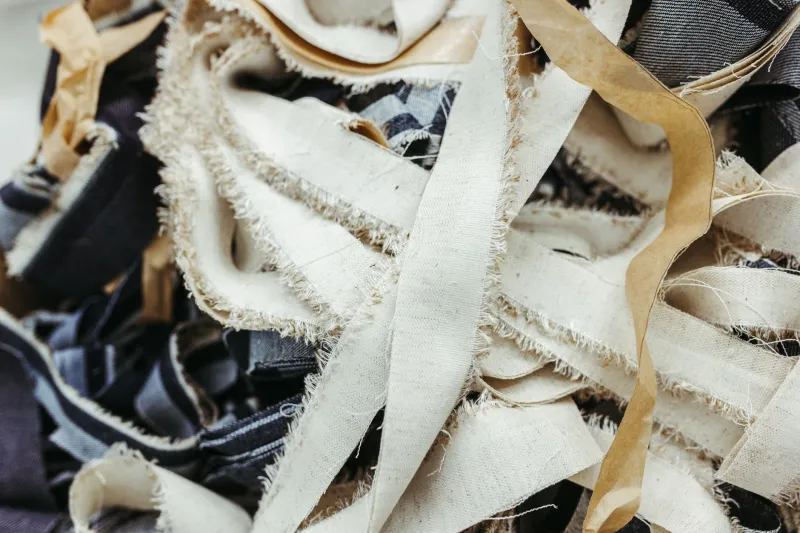
Chiba has a long industrial history that most visitors never see. The prefecture is home to a significant concentration of textile manufacturing operations — factories that produce everything from technical fabrics for workwear to specialty wovens for traditional Japanese garments. These facilities generate enormous volumes of offcut material: end-of-roll remnants, misprinted yardage, fabric that failed quality control by a thread (sometimes literally), and production overruns that never made it into the supply chain.
For most of the twentieth century, that material went straight to landfill or incineration. It was waste, full stop.
Designer Mika Hayashida saw it differently. About eight years ago, she started showing up at factory loading docks in Ichikawa and Matsudo with a van and a very direct question: could she have what they were throwing away?
The answer, more often than not, was yes.
"The factories were almost relieved," she recalled. "Disposal costs money. If someone takes the material off your hands and doesn't charge you for it, that's actually good business for them."
What Hayashida started doing with those materials — layering mismatched remnants into structured coats, piecing together asymmetric skirts from factory misprints, binding raw edges with hand-stitched sashiko-style embroidery — caught the attention of other young designers in the region who were asking similar questions about waste, craft, and what fashion could mean beyond trend cycles.
Wabi-Sabi in a Patchwork Coat
The aesthetic that's emerged from this scene isn't accidental. It draws explicitly on Japanese design principles that Western audiences have been circling around for years without always understanding their depth.
Wabi-sabi — the acceptance of imperfection and impermanence as sources of beauty — is practically the operating philosophy of Chiba's upcycled fashion movement. A coat made from three different fabric remnants isn't trying to hide its origins. The seams where different textiles meet are often highlighted, not concealed. The fact that two pieces of the same garment don't quite match in color or texture is the point.
Designer Tomohiro Imai, who works out of a studio in Chiba City that doubles as a fabric archive, describes his process as "archaeological."
"Every piece of fabric I find has a history," he said. "It came from somewhere. It was made for something that didn't happen. I'm not erasing that history — I'm continuing it."
Imai's garments have a sculptural quality that's hard to convey in photographs, though his Instagram following — which skews heavily toward followers in the US and Europe — suggests that photographs are doing a pretty decent job. His signature silhouettes reference both traditional Japanese workwear (the boxy, functional cuts of noragi farming jackets) and contemporary streetwear, creating something that feels simultaneously ancient and extremely now.
Why American Fashion Consumers Should Care
The American market has been talking about sustainable fashion for years, but the conversation has often been dominated by large brands making incremental improvements and marketing them aggressively. Organic cotton here. A recycling program there. The word "sustainable" has been stretched so thin in some corners of the industry that it barely means anything anymore.
What's happening in Chiba is different in kind, not just in degree.
These designers aren't making sustainability a feature of their brand. It's the foundation of their entire practice — not because it's marketable (though it increasingly is), but because working with waste was the only economically viable way to access interesting materials when they were starting out. The ethics and the economics aligned from the beginning, which gives the work an authenticity that's genuinely hard to fake.
Several Chiba designers have started shipping internationally through small-batch online releases that sell out quickly. American buyers in particular have responded to the limited-edition nature of the work — when a garment is made from a specific bolt of factory-reject fabric, there are only so many garments that can ever exist. That scarcity isn't manufactured. It's structural.
A handful of independent boutiques in cities like San Francisco and Brooklyn have started stocking pieces from Chiba-based designers, usually through connections made at craft fairs or through social media. The price points are higher than fast fashion, obviously, but comparable to what American consumers already pay for established Japanese brands — and the story behind each piece is considerably more interesting.
Craft as Resistance
There's a political dimension to this scene that the designers themselves are pretty open about. Japan's fashion industry, like most fashion industries, has been shaped by the logic of mass production and planned obsolescence. Making clothes slowly, from materials the system discarded, and selling them in small quantities to people who actually want to keep them — that's a quiet but real act of resistance against a model that most of the designers find genuinely troubling.
"Fast fashion treats clothes like they're disposable," Hayashida said. "We're trying to make clothes that feel like the opposite of that. That feel like they were made for you specifically, even if we've never met."
The Chiba scene doesn't have a collective name or a shared manifesto. It's more of a gravitational field — designers who know each other, share material sources, occasionally collaborate, and have developed a recognizable visual language without ever sitting down to define it.
That looseness is probably part of what makes it feel so alive. Nobody's managing the brand. They're just making things.
And the things they're making are worth paying attention to.