End of the Line, Beginning of Something Else: How Chiba's Dying Rural Stations Found a Second Life as Art
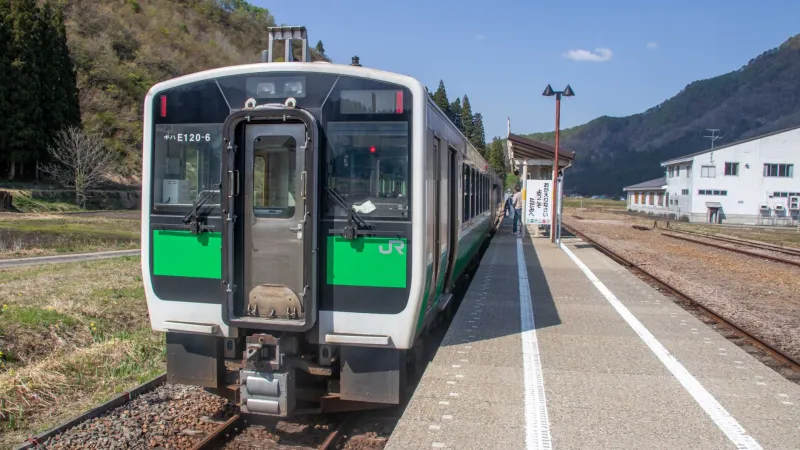
The last train on the Chōshi Electric Railway runs before most people have finished dinner. The line is only about seven miles long, connecting the small fishing city of Chōshi to the slightly smaller town of Tokawa on the northeastern tip of the Chiba peninsula. It runs infrequently. It runs slowly. Its vintage rolling stock looks like something a devoted hobbyist might have built in a very large basement. And it is, by almost every conventional measure of transit viability, on borrowed time.
But here's the thing: it's also become one of the most quietly fascinating cultural destinations in the entire prefecture.
Tracks to Nowhere, Platforms to Somewhere
Chiba is a big prefecture — bigger than most Americans realize, stretching from the dense urban fringe of Tokyo all the way out to the dramatic Pacific coastline of Chōshi and the agricultural flatlands of the Bōsō Peninsula's interior. The parts closest to Tokyo are booming. The parts farthest from it are doing something else entirely.
Rural depopulation has been reshaping Japan's countryside for decades, and Chiba's outlying areas have felt it as sharply as anywhere. Young people leave for Tokyo. Agricultural communities age and thin. The local tax base shrinks. And the rural train lines that once connected these communities — that were, in many cases, the original reason these communities formed where they did — become harder and harder to justify on a spreadsheet.
Several of Chiba's smaller rail lines have already ceased operations in the past twenty years. Others are running on emergency subsidies, operating at a fraction of their former capacity, serving populations that are themselves fractions of what they once were. The stations along these lines range from barely-maintained to fully abandoned — small wooden structures with hand-painted signs, waiting rooms with benches that haven't felt the weight of a regular commuter in years.
For most transit planners and local government officials, these stations represent a problem. For a growing number of artists, they represent something else entirely.
Galleries at the End of the Platform
The transformation started modestly, the way most interesting things do. A few years ago, a small group of artists in the Isumi area — a rural stretch of central Chiba known more for its rice fields and firefly festivals than its art scene — approached the operators of a struggling local line about using a shuttered station building as a temporary exhibition space.
The operators, who had approximately nothing to lose, said yes.
What happened next was the kind of thing that sounds obvious in retrospect but required genuine imagination to initiate. The station — a modest structure with a covered platform, a waiting room with original wooden benches, and a ticket window that hadn't sold a ticket in years — became a gallery. Local painters hung work on the walls. A ceramicist installed pieces along the platform edge. A textile artist used the old baggage room as a studio that visitors could watch in real time.
People came. Not in huge numbers, but in numbers that surprised everyone involved. And crucially, some of them came specifically because the setting was a train station — because the combination of art and railway nostalgia created an experience that couldn't be replicated in a conventional gallery space.
The station's particular atmosphere — the feeling of time held in suspension, of movement paused, of a place that was built for transit but has become a place of stillness — turned out to be an extraordinarily powerful context for art.
The Nostalgia Question
It's worth being honest about the complexity here, because the artists involved in Chiba's station revival scene generally are.
There's a version of this story that's pure nostalgia — a sentimental preservation of the past for its own sake, aestheticizing decline without engaging with its causes or consequences. Some critics of the station-as-art-space movement have made exactly this argument: that turning a dying train station into a gallery is a way of making peace with its death, of making the loss beautiful enough that people stop fighting it.
The artists working in these spaces tend to push back on that reading, though not dismissively.
"Nostalgia is part of it, sure," said one painter who has shown work in multiple station venues across the Bōsō Peninsula. "But nostalgia isn't nothing. It's a feeling that tells you something mattered. The question is what you do with that feeling — whether you just sit in it or whether you use it to build something."
Several of the station-based projects have been explicitly designed to engage the surrounding community rather than simply attract outside visitors. One station in the Chōsei area hosts monthly community dinners in its waiting room, combining local food, live music, and rotating art exhibitions in a way that's less about attracting tourism and more about giving the remaining residents of the area a reason to gather. The art is almost incidental — or rather, it's the excuse, the frame that makes the gathering feel intentional rather than accidental.
What Japan Does With What It Can't Let Go
For American visitors, there's something specifically Japanese about the way these station projects operate that's worth pausing on.
In the US, when infrastructure becomes economically unviable, the dominant cultural response tends toward either aggressive repurposing (the High Line in New York, the various converted warehouse districts in cities across the country) or simple abandonment. The transformation is usually total — the original function is erased and replaced with something new, or the structure is left to decay without ceremony.
Japan has a different relationship with things it can't quite let go of. The concept of mono no aware — the bittersweet awareness of impermanence, the poignancy of things passing — is woven deeply into Japanese aesthetic culture. It doesn't demand that things be saved or erased. It asks that their passing be witnessed, acknowledged, and treated with care.
The station art projects in Chiba feel like a practical expression of that sensibility. They're not pretending the trains will come back. They're not trying to freeze the stations in amber. They're doing something harder and more interesting — continuing to find meaning in spaces that the economy has moved on from, without denying that the economy has moved on.
The Train That Still Runs
Back in Chōshi, the little electric railway keeps operating, somehow. Its cars are decorated with local artwork. Its stations double as small galleries. Tourists come specifically to ride it — not despite its age and fragility, but because of them.
It's not a model that scales. It's not a solution to rural depopulation or the structural economics of low-density transit. But it's a reminder that the value of a place isn't always legible on a balance sheet.
Sometimes the most important thing a station can do is give people a reason to show up.