Everyone Sings, Nobody Judges: In Defense of Chiba's Snack Bars
Let me say something slightly controversial: Tokyo's nightlife is overrated.
Not bad, exactly. Just... curated. Everything in the capital's glittering districts is designed, priced, and lit to make you feel a certain way. There's a guest list, a cover charge, a hierarchy. Somebody is always deciding whether you belong.
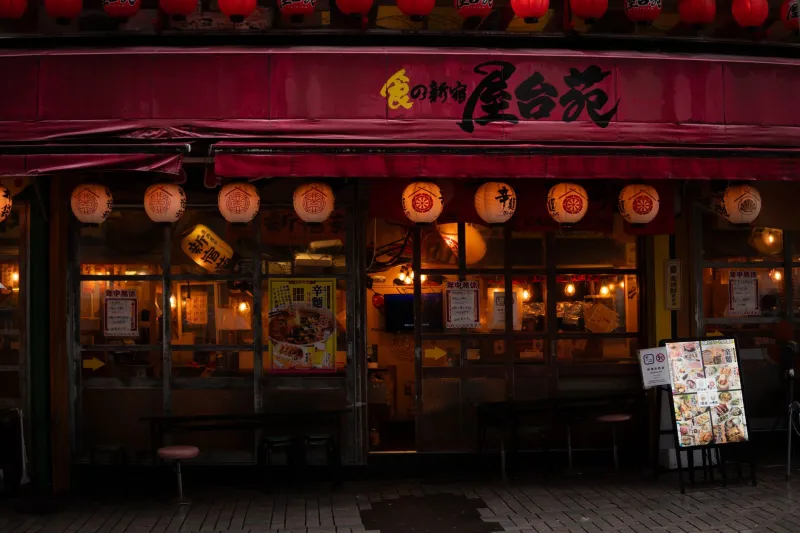
Then you take the train forty minutes out of the city, walk down a narrow stairwell in Chiba City or Funabashi or Tateyama, push aside a curtain, and enter a snack bar — and suddenly all of that machinery falls away.
What Even Is a Snack Bar?
For the uninitiated: a snack (su-nakku) is a tiny bar, usually seating ten to twenty people, typically run by a motherly hostess known as the mama-san. There's karaoke. There's a bottle keep system where regulars store their whiskey behind the bar. There is, almost always, a tambourine making the rounds.
The crowd is the beautiful part. On any given night you might find a tuna fisherman still smelling of salt, a salaryman loosening his tie, a couple of nursing students, a retired teacher, and — increasingly — a tourist who wandered in off the street and got adopted within minutes. Everyone sings the same Enka ballads and the same mispronounced Beatles covers. Everyone claps for everyone.
The Case for the Undesignated Space
Here's my argument: rooms like this barely exist in America anymore, and Tokyo's version of them is fading too.
The third place — the space that isn't work and isn't home — has been monetized, optimized, and review-bombed into blandness. Yelp and Google ratings reward consistency, and consistency kills character. The snack bar survives precisely because it's too small, too local, and too weird to scale.
In a snack bar, the mama-san is the algorithm. She reads the room, sequences the songs, teases the shy regular, and gently protects newcomers from embarrassment. That's a form of hospitality no app has replicated. The social contract is simple: you sing, you clap, you buy a round when it's your turn, and for a few hours you're not a job title.
I've watched a nervous American exchange student butcher a enka classic and get a standing ovation from three fishermen and a grandmother. I've watched a CEO of a mid-size manufacturing firm sing a duet with a twenty-two-year-old line cook. Show me the Manhattan venue where that happens.
A Nervous First-Timer's Guide to Grabbing the Mic
Convinced? Good. Here's how to survive your first night:
1. Go early, go with one friend. Snack bars fill up with regulars by 9 p.m. Arriving around 7:30 gives the mama-san time to suss you out before the room gets loud.
2. Buy the first drink, then buy the room a round. The bottle-keep system means regulars store their own liquor. As a newcomer, ordering a bottle of beer or whiskey for the table is your entry fee into the community.
3. Let the mama-san pick your first song. She knows the room's energy. Trust her. If you must choose, pick something mid-tempo and universally known — think "Top of the World" energy, not death metal.
4. Sing badly with confidence. Nobody at a snack bar can sing, and that's the point. A committed, terrible performance earns more love than a technically competent one.
5. Play the tambourine when it's handed to you. This is not optional. It is never optional.
6. Close your tab with cash and say hello when you leave. Many snacks still run on cash and honor systems. Saying "ojama shimashita" on your way out marks you as someone who gets it.
The Rooms Worth Keeping
Chiba has hundreds of these places, from the port district bars of Choshi to the station-adjacent dens of Kashiwa, and honestly, the best one is the one closest to wherever you happen to be standing at 8 p.m. That's the whole ethos. No lists, no lines, no gatekeepers.
Just a curtain, a mama-san, a tambourine, and the radical idea that everyone in the room — fisherman, student, stranger — deserves the same microphone.