Liquid Gold from the Kanto Plains: Meet the Brewers Turning Chiba Shoyu Into a Fine-Dining Obsession
If you've ever dipped a piece of sushi into a shallow dish of soy sauce without thinking twice about it, Chiba Prefecture would like a word with you.
For most Americans, soy sauce is soy sauce — that dark, salty bottle sitting next to the takeout containers on a Tuesday night. But spend a few hours driving through the flatlands and river towns of Chiba, and you'll start to understand that this condiment has a biography. A long, complicated, genuinely fascinating one. And right now, a group of craftspeople scattered across the prefecture are rewriting the final chapter into something that's turning heads at Michelin-starred restaurants from Tokyo to New York.
Why Chiba? The Geography of Flavor
It's not an accident that Chiba became Japan's soy sauce heartland. The Tone River basin, which stretches across the northern edge of the prefecture, offered early brewers everything they needed: an abundance of locally grown soybeans and wheat, clean water filtered through the Kanto alluvial plain, and a climate with enough seasonal temperature swing to coax slow, complex fermentation. Towns like Noda and Choshi became synonymous with shoyu production as far back as the Edo period, supplying the growing city of Edo — modern-day Tokyo — with the condiment that would quietly define Japanese cuisine.
At its peak, the region was home to dozens of competing breweries, each with its own proprietary koji mold cultures, its own preferred ratios of soy to wheat, its own generational secrets passed down through family lines. Many of those breweries eventually consolidated into larger industrial operations. But a stubborn handful held on, and today, those survivors are the foundation of something genuinely exciting.
The New Artisans: Craft Shoyu Gets Serious
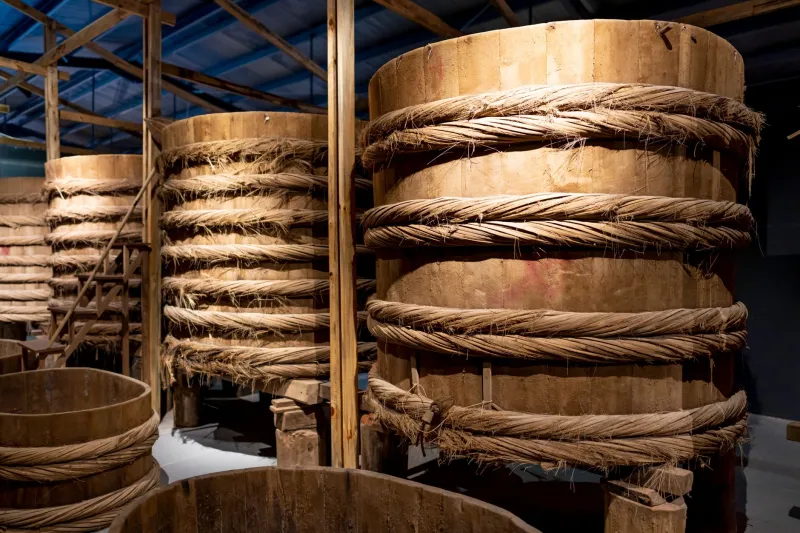
Walk into a small-batch brewery in Noda on a cool morning and the smell hits you before anything else — a deep, warm, almost chocolatey funk that's equal parts savory and sweet. It's the smell of moromi, the fermenting mash of soybeans, roasted wheat, salt, and water that eventually becomes soy sauce. In a craft operation, that mash might sit in ancient cedar barrels called kioke for anywhere from one to three years, developing layers of complexity that a mass-produced product fermented in temperature-controlled stainless steel tanks simply cannot replicate.
The brewers leading this movement aren't just preserving old techniques — they're interrogating them. Some are experimenting with single-origin soybeans sourced from specific Chiba farms, curious about how terroir affects flavor the same way a winemaker thinks about soil composition. Others are playing with extended aging, pulling sauces that have spent upward of five years in barrel and presenting them almost like fine whisky — small bottles, tasting notes, the whole ritual.
One approach gaining attention involves layering different fermentation stages, essentially blending young and aged moromi to create a sauce with brightness up front and a long, molasses-dark finish. It sounds technical because it is, but the result in the bottle is anything but academic. It's the kind of thing that makes a plain bowl of rice taste like a decision you made on purpose.
Kioke: The Comeback of the Cedar Barrel
No conversation about craft shoyu is complete without talking about kioke, and no conversation about kioke is complete without acknowledging how close these wooden brewing vessels came to disappearing entirely. By the late twentieth century, most Japanese soy sauce producers had switched to easier-to-clean stainless steel. The craftspeople who made kioke were aging out of the trade with no apprentices lined up to replace them.
The reversal has been slow but real. A small coalition of brewers — some in Chiba, others across Japan — recognized that kioke weren't just nostalgic props. The porous cedar wood harbors microorganisms unique to each brewery, living cultures that contribute directly to the flavor profile of the sauce. Lose the barrels, and you lose something invisible but irreplaceable. The movement to revive kioke production has drawn coverage from international food media, and Chiba breweries using traditional wooden vessels have started appearing on the sourcing lists of serious chefs in the US who are building Japanese-inflected tasting menus.
Shoyu as Ingredient, Not Afterthought
Here's where American food culture comes into the picture in a real way. The farm-to-table movement spent the better part of two decades convincing US diners to care deeply about where their olive oil came from, which farm raised their chicken, and whether their salt was harvested by hand. Craft soy sauce fits neatly into that same framework — it's a single-ingredient condiment with a traceable origin, a production philosophy, and a flavor that varies meaningfully based on how it was made.
Chefs in cities like San Francisco, Chicago, and New York have already started treating premium Japanese shoyu the way they treat aged balsamic or single-estate olive oil — as a finishing element rather than a background note. A few drops of a three-year Chiba-aged sauce over a piece of seared fish or a wedge of ripe tomato does something that the standard supermarket bottle simply can't replicate. The umami is rounder, the salt less sharp, and there's a subtle sweetness that lingers.
For home cooks, the entry point is easier than you'd think. Several Chiba producers now ship internationally, and a growing number of Japanese grocery importers in the US carry small-batch regional shoyu alongside the more familiar national brands. The price difference is real — you're looking at anywhere from $15 to $40 for a small bottle compared to a few dollars for the mass-market stuff — but the context makes it worth it.
Tasting the Tradition
If you ever find yourself in Chiba — and if you're reading this site, we sincerely hope you do — the shoyu breweries of Noda and Choshi are worth building an itinerary around. Several family-run operations offer tours that walk visitors through the fermentation process, let you smell the different stages of moromi, and usually end with a tasting flight that functions like a genuine sensory education. You'll try light usukuchi styles meant for delicate soups, rich tamari-adjacent sauces built for grilled meats, and experimental small-batch releases that don't have an easy category yet.
It's a side of Chiba that doesn't make the typical tourist brochure, tucked between the prefecture's more obvious draws. But for anyone who takes food seriously — and plenty of Americans do — it's the kind of experience that recalibrates how you think about a condiment you've been using your whole life.
The brewers of Chiba didn't set out to start a craft movement. Most of them were just trying to keep a family business alive, honoring a process their grandparents taught them while finding small ways to push it forward. That combination of reverence and curiosity turns out to be exactly the right formula. The rest of the culinary world is starting to catch on.