Old Screens, New Dreams: The Vintage Cinemas of Chiba Getting a Second Act
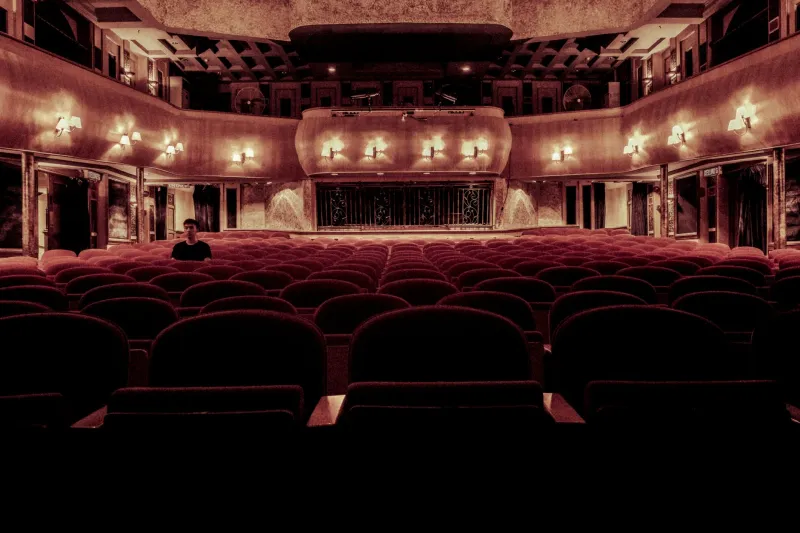
There's a particular kind of magic that hits you the moment you step inside an old movie theater. The faint smell of decades-old upholstery. The way sound moves differently in a room built to carry it. The sheer audacity of a ceiling designed to make you feel small in the best possible way. Chiba has a handful of these places left — and right now, they're having a moment.
While flashy multiplex chains dominate the prefecture's newer commercial districts, a quieter revolution is unfolding inside the kind of cinema buildings most people assumed were doomed. Owners are pivoting. Architects are getting involved. And a generation of young creatives who grew up watching Netflix on laptops is suddenly very, very interested in rooms with 40-foot screens and balcony seating.
The Buildings That Time (Almost) Forgot
Chiba's surviving vintage theaters aren't just old — they're architecturally specific in a way that makes preservationists a little emotional. Several date from the postwar boom years of the late 1940s and 1950s, when Japanese cities were rebuilding fast and cinema was the dominant form of mass entertainment. Others pushed into the early 1970s before the rise of home video began chipping away at attendance.
The stylistic range is genuinely surprising. You'll find traces of Western Art Deco influence — streamlined exteriors, geometric tilework, marquee lettering that looks like it belongs on a Chicago jazz club — sitting alongside more distinctly Japanese mid-century sensibilities: clean horizontal lines, understated ornamentation, interiors that feel almost meditative despite being designed for crowds.
Many of these buildings survived not through any grand preservation effort but simply because nobody got around to tearing them down. Land use economics in some of Chiba's smaller cities and towns meant the calculus for demolition never quite worked out. Lucky break for everyone, it turns out.
When a Theater Owner Stops Showing Movies
Take the story of one family-run cinema in a quieter corner of Chiba City that spent most of the 2010s hemorrhaging customers to online streaming. The third-generation owner — a soft-spoken man in his late fifties who inherited the building from his father — was candid about how close he came to selling.
"I kept thinking the building was the problem," he told us during a recent visit. "Too old, too hard to maintain. But then I started getting calls from people who weren't asking about film schedules. They wanted to rent the space."
The early requests were modest: a local band wanted a dramatic backdrop for a music video. A design school asked about using the lobby for a student showcase. A community theater group had outgrown their usual venue. He said yes to all of them, more out of curiosity than strategy. What happened next surprised him.
"The people who came for those events — they started coming back. Not for movies necessarily, but just... to be here. They liked the space."
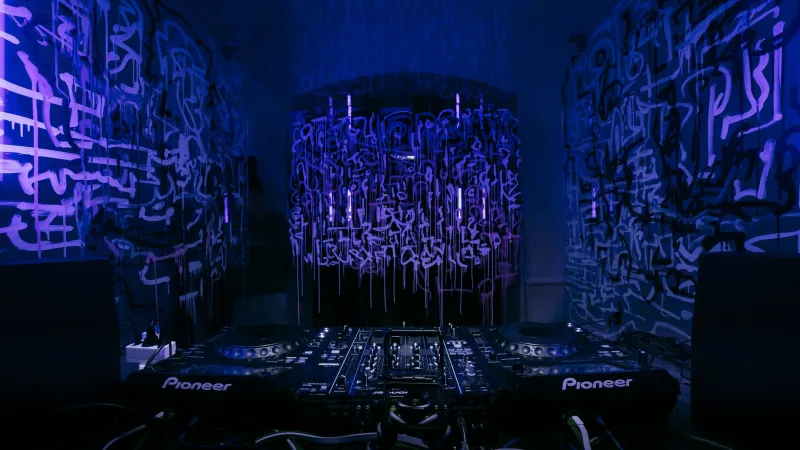
Today, the theater runs a hybrid calendar that mixes classic film screenings with live acoustic performances, rotating art installations in the lobby, and the occasional late-night DJ event where the projection booth gets repurposed in ways its original designers definitely never imagined.
Architects Paying Attention
The design community in the greater Tokyo-Chiba area has started taking serious notice. A few preservation-focused architects have begun documenting Chiba's surviving vintage cinemas with a level of rigor usually reserved for registered national landmarks — which most of these buildings are not, at least not yet.
One architect working on adaptive reuse projects across Kanto described the opportunity in almost frustrated terms. "These are significant spaces," she said. "The acoustics alone — a well-built mid-century cinema has acoustic properties that you literally cannot replicate cheaply. Modern event spaces spend enormous money trying to achieve what these rooms already have."
Her firm has been consulting on the renovation of one Chiba theater that's transitioning into a hybrid live music and cinema venue, with the goal of preserving the original interior while upgrading the technical infrastructure enough to attract touring acts. The challenge, she explains, is threading a needle between authenticity and function.
"You can't just freeze a building in amber and expect people to use it. But you also can't gut it and call it preservation. The interesting work happens in the middle."
Young Creatives Finding Their Room
Perhaps the most unexpected part of this story is who's actually showing up. The demographic gravitating toward these revitalized spaces skews younger than you might expect — late teens through early thirties, many of them digital natives with no particular nostalgia for the golden age of cinema.
For this generation, the appeal isn't retro sentimentality. It's more practical than that. Tokyo's creative scene, for all its energy, is expensive and competitive in ways that can feel suffocating. Chiba's vintage theaters offer something genuinely rare: affordable, atmospheric, large-format spaces that aren't already colonized by established institutions.
A 26-year-old photographer who recently staged her first major solo exhibition inside a converted cinema lobby put it simply: "I couldn't afford a gallery in Tokyo. And honestly? Even if I could, it wouldn't look like this."
She gestured at the curved ceiling above us, at the original ticket booth she'd incorporated into the exhibition design, at the way afternoon light came through a set of small original windows and hit the prints at an angle she'd spent three weeks figuring out. "This place has a personality. A lot of gallery spaces don't."
The Tension Nobody's Pretending Isn't There
It would be easy to tell this story as a straight-up feel-good revival narrative, but the people involved are more honest than that. Preservation and modernization pull in genuinely different directions, and not every decision ends happily.
Some theater owners have made changes that preservation advocates quietly wince at — original seats replaced with generic modern ones, decorative elements painted over during hasty renovations, structural modifications that solved short-term problems while erasing irreplaceable details. The pressure to make these buildings financially viable is real, and it doesn't always leave room for the slower, more expensive work of doing things right.
There's also the question of what "community hub" actually means in practice. A theater that books edgy art events on weekends isn't automatically serving the full range of people who live nearby. Some longtime residents of neighborhoods around these cinemas feel like the revitalization is happening around them rather than for them — a tension that's familiar to anyone who's watched a creative class move into an affordable neighborhood in any American city.
Why It Matters Beyond Chiba
For American visitors or anyone following the broader story of how cities hold onto their cultural infrastructure, what's happening in Chiba's old cinemas feels relevant well beyond Japan. Cities everywhere are wrestling with the same question: when a building loses its original purpose, what do you owe it?
Chiba doesn't have a definitive answer. But it has some genuinely compelling experiments underway — run by people who are willing to sit with the complexity of that question rather than bulldoze past it. That, maybe more than any single beautifully preserved lobby, is worth paying attention to.
Next time you're in the prefecture, skip the multiplex. Find one of these places. Buy a ticket to whatever's happening. The screen might be dark, but something's definitely still showing.