Clay, Salt Air, and Sweat: The Chiba Roots That Built Sumo Into Japan's Most Beloved Sport
Ask most Americans what they know about sumo and you'll get roughly the same answer: big guys, tiny shorts, dramatic slapping. Fair enough. But ask a serious sumo historian where the sport's cultural DNA was forged, and the conversation takes a sharp left turn — away from Tokyo's Ryogoku Kokugikan arena and straight into the rice paddies and fishing villages of Chiba Prefecture.
Yeah. Chiba. The place most international visitors see only through a train window on the way to Narita Airport.
That's kind of the whole point of being here at Chiba Joji — to peel back the obvious stuff and find what's actually cooking underneath. And what's cooking in Chiba's sumo story is something genuinely fascinating.
Why Chiba? The Geography of Strength
To understand why Chiba became a sumo stronghold, you have to think about what life looked like in this region a few centuries ago. The Chiba Peninsula was agricultural and coastal — a place where men spent their days hauling nets, planting rice, and wrestling with the physical demands of rural Edo-period Japan. Bodies got big. Endurance got built the hard way.
Sumo in its early organized form wasn't just a sport — it was deeply tied to Shinto ritual and agricultural celebration. Communities across Japan held local tournaments to pray for good harvests and honor the gods. Chiba's villages were no exception, and the competitive culture that emerged from those regional matches produced wrestlers of unusual quality.
"The physical environment shaped everything," explains Kenji Matsumoto, a sumo historian based in Chiba City who has spent two decades documenting the prefecture's wrestling heritage. "Coastal labor builds a different kind of athlete than city life does. Chiba men came into training with a baseline of physical toughness that coaches in Edo noticed immediately."
That reputation stuck. For much of the Edo period and into the Meiji era, recruiters from prominent sumo stables made regular scouting trips into Chiba's interior, essentially treating the prefecture like a farm system for future rikishi.
The Wrestlers Who Put Chiba on the Map
The history books don't always shout Chiba's name, but dig into the genealogy of sumo's great lineages and you'll find Chiba-born wrestlers scattered throughout. Several rikishi who reached the sport's upper ranks — including wrestlers who competed under the prestigious yokozuna and ozeki designations — traced their origins to towns and villages across the peninsula.
One name that comes up repeatedly in regional sumo lore is that of wrestlers from the old Kazusa Province, the historical region covering much of what is now central and southern Chiba. Kazusa men developed a reputation for a grinding, patient style of wrestling — less flashy than some of the showier techniques favored in Osaka, but brutally effective in long matches.
"There's a saying among older sumo people," Matsumoto tells us with a grin, "that a Kazusa wrestler will lose the first three minutes and win the fourth. They're built for endurance."
That style, patient and rooted, arguably influenced the technical evolution of sumo in ways that still echo in how the sport is taught at elite stables today.
The Stables Still Standing
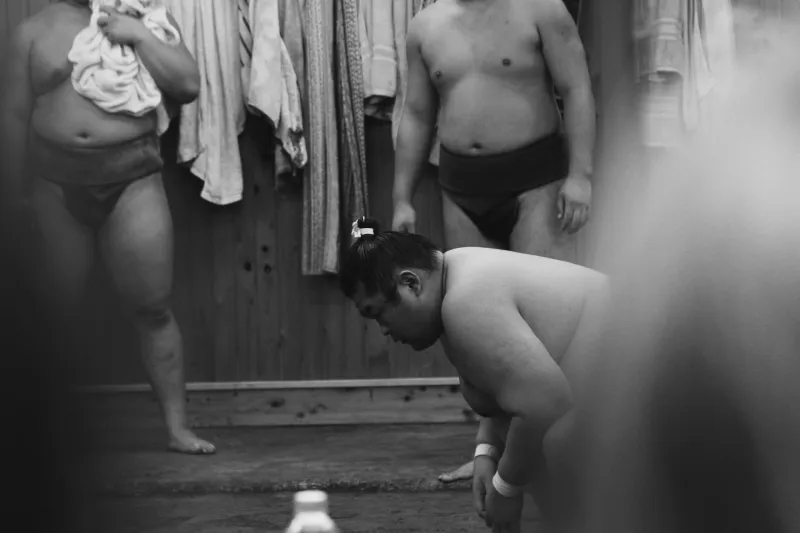
Here's where Chiba's sumo story stops being purely historical and gets genuinely alive. The prefecture is home to several active heya — sumo training stables — where wrestlers live, train, and eat together under the supervision of a retired champion turned master.
Visiting one of these stables, even as an outside observer, is a genuinely arresting experience. Morning practice, called keiko, starts before most of the city is awake. The sound of bodies hitting clay echoes through narrow residential streets. Wrestlers in their early teens train alongside veterans in their late twenties, the hierarchy rigid and the atmosphere somewhere between a monastery and a military academy.
One stable master in the greater Chiba area — a former mid-ranked professional who asked that his stable not be named for privacy reasons — talked to us about what makes training in Chiba distinct from the Tokyo stable scene.
"Tokyo stables are surrounded by the city. There's noise, distraction, media. Here, the boys can focus. We have space. We have quiet. And honestly, we have a tradition to protect. This region has been producing wrestlers for hundreds of years. That means something to us."
It clearly means something to the wrestlers, too. Several current professionals competing in Japan's top sumo division have spent formative training years in Chiba stables, even if their official stable affiliation is listed elsewhere.
The Fan Culture Nobody Talks About
Beyond the training grounds, Chiba has a sumo fan culture that flies completely under the radar for tourists. Local tournament viewing parties — gathered around big screens in community centers, izakayas, and even the occasional fish market — carry an energy that's hard to find in more polished Tokyo venues.
In towns like Mobara and Togane, locals who grew up watching neighborhood boys leave for sumo stables track professional careers with the obsessive pride of small-town Americans following a kid who made the NFL. The personal connection is real. These aren't distant celebrities — they're guys whose parents still live down the road.
"I watched [a current professional] practice in the park behind my school when we were both twelve," said one Chiba City resident we spoke with outside a grocery store. "Now I watch him on NHK. It's strange and wonderful at the same time."
That intimacy — the sense that sumo isn't just a national spectacle but a local, living tradition — is something Chiba offers that no amount of Ryogoku tourism can replicate.
Getting Close to the Action
For visitors curious about experiencing this side of Chiba, the options are more accessible than you might expect. Some stables open morning practice sessions to respectful outside observers on a limited basis — it's worth researching specific heya schedules before your trip, as policies vary and change seasonally. The Japan Sumo Association's website and local Chiba tourism boards can point you toward current opportunities.
Beyond stable visits, the Chiba Prefectural Museum of History in Sakura holds materials related to the region's sumo heritage, tucked among broader exhibits on Kanto culture. It's not a dedicated sumo museum, but the context it provides for understanding how deeply sport and agricultural community life intertwined in this region is genuinely illuminating.
The Bigger Picture
There's something quietly poetic about the fact that sumo — Japan's most ceremonially elaborate, most visually iconic sport — has its working roots in a place as unpretentious as Chiba. No glittering skyline. No UNESCO plaques. Just clay, discipline, and a centuries-long tradition of turning physical hardship into something that looks, from the outside, almost like art.
Chiba doesn't need the credit, frankly. The wrestlers know where they came from. The stable masters know what they're preserving. And now, maybe, you do too.