Kilns, Characters, and Clay: How Chiba's Ancient Pottery Villages Are Winning Over a New Generation of Fans
If you picture a traditional Japanese pottery studio, you probably imagine a serene old craftsman hunched over a wheel, coaxing a tea bowl into existence while incense drifts through a wooden workshop. What you probably don't picture is a shelf lined with hand-thrown ceramic versions of beloved anime characters, or a master potter carefully carving a manga hero's crest into the side of a freshly glazed vase. But that's exactly what's happening in Chiba Prefecture right now — and it's one of the most quietly exciting cultural stories coming out of Japan.
Chiba has never gotten the same pottery tourism buzz as, say, Kyoto's Kiyomizu-yaki district or Aichi's Seto ware region. But the prefecture has its own deep ceramic heritage, rooted in the earthenware traditions of the Boso Peninsula and the rustic folk kilns that dot the inland hills. For generations, these studios kept going the old way — local clay, wood-fired kilns, traditional forms. Then the anime industry came knocking.
When Otaku Culture Met the Old Kiln
The crossover didn't happen overnight, and it wasn't the result of some corporate marketing campaign. It started, as most interesting things do, with individual people taking a chance.
Takahashi Minoru, a third-generation ceramicist working out of a small studio near Ichihara, remembers the first time a friend in the animation business asked if he'd be interested in collaborating. "I thought he was joking," Takahashi says, laughing. "I make rice bowls. What do I know about anime?" What he did know, it turned out, was everything about texture, weight, glaze chemistry, and the way clay holds detail. Those skills translated directly into figurine work in ways neither he nor his industry contact had anticipated.
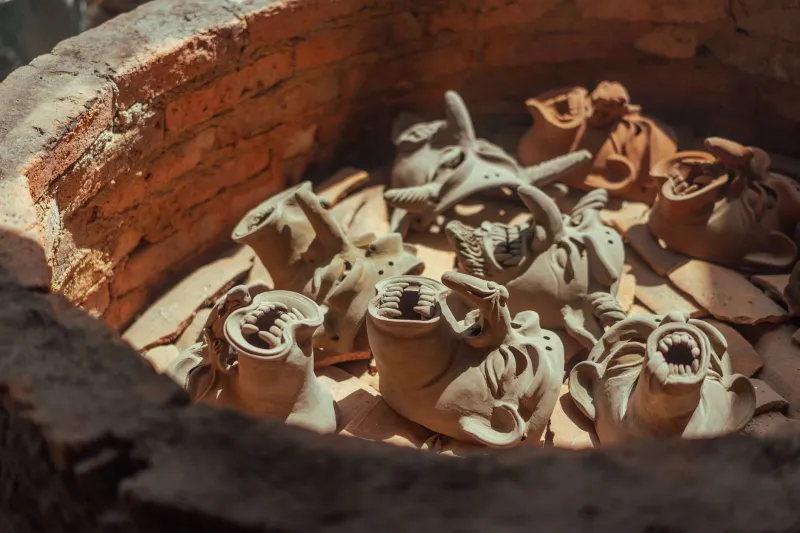
That first collaboration — a limited run of hand-thrown ceramic figures based on characters from a popular fantasy manga series — sold out within hours of being listed online. Not just in Japan. Buyers in the US, Europe, and Southeast Asia snapped them up, drawn by the novelty of owning something that was simultaneously a piece of pop culture and a genuine work of craft.
"People kept writing to me asking if they were really made by hand," Takahashi says. "They couldn't believe it. That surprised me more than anything — that people cared."
The Craft Doesn't Change — The Subject Does
What makes these Chiba studios stand out isn't just the subject matter. It's the insistence on maintaining traditional technique even when the output looks nothing like what came out of the kiln fifty years ago. The clay is still sourced locally where possible. The glazes are still mixed by hand using regional materials. The firing temperatures and schedules are still determined by experience rather than digital readouts.
Yoshida Keiko, who runs a studio in the hills outside Mobara with her husband, puts it plainly: "The bowl I made yesterday and the character figure I made this morning — same hands, same clay, same fire. The only difference is what I'm thinking about when I shape them."
Yoshida's studio has become something of a pilgrimage site for a certain kind of traveler — the type who might spend a weekend in Tokyo hitting Akihabara and Shibuya, then take the train out to Chiba to visit a pottery village they found through a collector's forum. It's a crossover audience that the traditional craft world never really had before, and studios like hers are figuring out how to welcome them without losing the atmosphere that makes the work meaningful in the first place.
Her studio now offers half-day workshops where visitors can try hand-building techniques while working from reference sheets of popular characters. "Some of them have never touched clay before," she says. "But they're so motivated because they love the character. By the end, they understand why this takes years to do well. That's the point."
Anime Studios Are Taking Notice
The relationship isn't one-sided. Several animation production companies with ties to the greater Tokyo-Chiba corridor — Chiba sits right on Tokyo's eastern edge, and more than a few studios operate out of the prefecture or nearby — have begun reaching out to ceramic artists directly, looking for partnerships that add a premium, handcrafted dimension to their merchandise lines.
For the studios, it's a way to offer something that mass-produced plastic figures simply can't compete with. For the ceramicists, it's a revenue stream that helps sustain work that has always operated on thin margins. But more than the economics, several artisans mention something harder to quantify: the energy that comes with a new audience.
"Young people come in here now," says Takahashi. "Twenty-year-olds. They ask questions. They want to learn. That didn't happen before." He pauses, looking around his workshop — the wheel in the corner, the drying shelves, the small kiln out back that his grandfather built. "This place was going to end with me. Now I'm not so sure."
Finding Your Way Out There
For American travelers planning a Japan trip, Chiba's ceramic studios represent the kind of off-the-beaten-path experience that travel forums rave about but rarely spell out in practical terms. Most of the studios we're talking about are accessible by train from Tokyo's eastern terminals, with a bit of local bus or taxi navigation once you get to the smaller towns. Ichihara, Mobara, and a handful of villages along the Boso Peninsula are good starting points.
A few studios now have English-language booking options for workshops, particularly those that have developed relationships with international collectors through online sales. It's worth emailing ahead — not every studio is set up for walk-ins, and the artisans are, after all, actually working.
If you're the kind of person who's spent money on a limited-edition figure and wished it felt more like an actual object — something with weight and history and the faint mark of human hands — this is worth your time. These studios are producing exactly that, and they're doing it in a setting that hasn't changed much since your great-grandparents' era.
Old Craft, New Story
What's happening in Chiba's pottery villages doesn't fit neatly into any single cultural category. It's not exactly preservation, because the work is changing. It's not exactly commercialization, because the craft integrity is fiercely protected. It's something more interesting than either — a genuine dialogue between generations, between art forms, between the people who kept an old tradition alive and the people who showed up, unexpectedly, to care about it.
The kilns are still burning. The clay is still local. And somewhere in a studio outside Ichihara, a third-generation potter is carving a manga hero's crest into a piece of stoneware with the same hands that have shaped thousands of tea bowls. That's Chiba for you — always a little more surprising than you expect.