Buddha and Bandwidth: Inside the Chiba Temples Where Japan's Tech Workers Come to Unplug
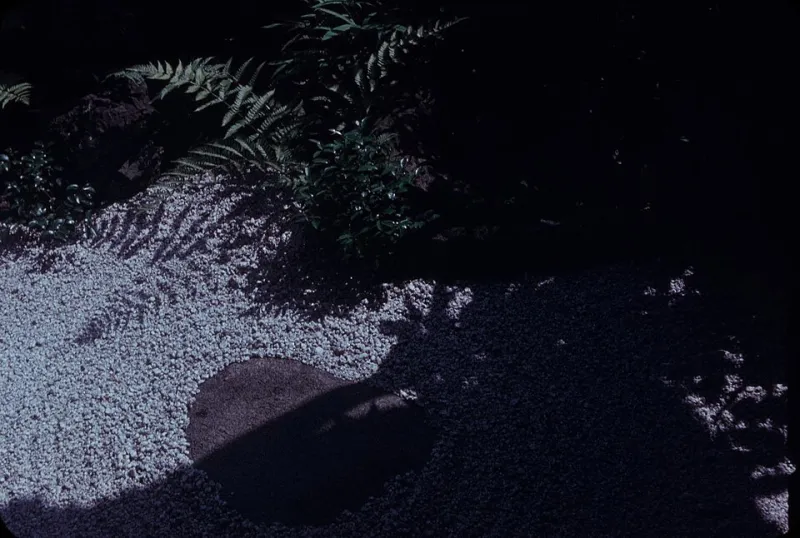
Photo: Carlquist, Sherwin John, 1930-2021, CC BY 4.0, via Wikimedia Commons
On a Tuesday morning that feels nothing like a Tuesday morning, a man named Kenji is sitting cross-legged on a wooden floor that has been worn smooth by centuries of knees just like his. His phone is in a bamboo basket near the entrance. His Slack notifications are, for once, someone else's problem. Outside, a crow calls out from a cedar tree that was old before the internet was even a dream.
Kenji is a senior software architect at a mid-size SaaS company headquartered in Makuhari. He's 34, has a standing desk, a meal-prep subscription, and what his doctor gently described as "stress markers that are worth paying attention to." He found this temple — a modest Zen compound tucked into the wooded hills of Chiba's interior — through a coworker who found it through Reddit. He's been coming every other weekend for four months.
"I've tried every app," he says, during a break between sitting sessions. "Headspace, Calm, even some binaural beats thing my friend swore by. None of it touched what an hour of actual zazen does."
What Kenji is experiencing isn't a trend exactly — it's more like a rediscovery. And it's happening all across Chiba Prefecture, where a loose network of Buddhist temples, Shinto retreat centers, and contemplative communities has quietly become one of the most unlikely wellness destinations in the greater Tokyo metro area.
Why Chiba? Why Now?
Chiba doesn't get the same ink as Kyoto when people talk about spiritual Japan. There's no golden pavilion, no famous stone garden, no bullet train full of tourists clutching temple guidebooks. What Chiba has instead is something harder to market but arguably more valuable: proximity, authenticity, and a pace of life that Tokyo simply cannot offer.
The prefecture is home to more than 1,500 registered temples, many of them dating back to the Heian and Kamakura periods. Some are modest neighborhood affairs. Others — like Naritasan Shinshoji Temple in Narita, one of the most visited temples in all of Japan — draw millions of visitors a year. But sandwiched between the famous sites and the forgotten ones is a whole category of working temples that have, in recent years, started opening their doors to a very specific kind of guest: the digitally exhausted.
Monk Ryokan Tanaka, who oversees a small Soto Zen temple in the hills near Ichikawa, has watched this shift happen in real time. "Five years ago, maybe one or two people a month would ask about zazen practice," he says. "Now we get inquiries every week. Young people, middle-aged people, people who have never set foot in a temple except for a funeral."
Tanaka is careful not to frame what he offers as a wellness product. He bristles, gently, at words like "mindfulness" and "reset." But he's also pragmatic about the moment. "The Buddha taught that suffering comes from attachment and distraction," he says. "I don't think he would be surprised that the biggest source of distraction in this era fits in your pocket."
The Burnout Pipeline
To understand why tech workers specifically are showing up at temple gates, it helps to understand just how thoroughly Japan's tech sector has absorbed — and in some ways amplified — the worst habits of Silicon Valley.
The culture of karoshi, death by overwork, is well-documented in Japan. But the newer generation of tech workers arrived with a different set of expectations, many shaped by startup mythology imported from the US: hustle culture, "always-on" availability, the idea that passion for your work should be indistinguishable from your identity. When that collides with Japan's existing workplace expectations, the results can be brutal.
A 2023 survey by a Tokyo-based HR consultancy found that nearly 60 percent of workers in Japan's tech sector reported symptoms consistent with chronic burnout. Younger workers — those under 35 — were actually more likely to report burnout than their older counterparts, a reversal of historical patterns.
For many of these workers, the temples represent something therapy apps and productivity systems can't quite provide: a framework that predates the problem. Zen practice doesn't ask you to optimize your suffering. It asks you to sit with it.
What a Retreat Actually Looks Like
For first-timers, the experience can be disorienting in the best possible way. Most temple retreats in Chiba's network run from a single afternoon session to a full weekend sesshin — an intensive period of silent sitting, walking meditation, and communal meals. Phones are surrendered at the door. Schedules are simple and non-negotiable. You wake early, you sit, you eat in silence, you work (cleaning, gardening, small repairs), you sit again.
The food alone tends to stop people in their tracks. Shojin ryori, the traditional Buddhist vegetarian cuisine served at many of these temples, is a world away from the convenience store onigiri that constitutes most tech workers' lunches. Seasonal vegetables, miso, pickled things, rice — every element chosen and prepared with a care that feels almost confrontational in its simplicity.
"I cried at breakfast on the second day," admits Yuki, a UX designer from Chiba City who attended a three-day retreat last spring. "Not sad crying. Just — I couldn't explain it. Something about eating food that someone made slowly, with attention. I hadn't experienced that in a long time."
The Monks Adapting Ancient Tools
Not every temple in Chiba's emerging retreat circuit is interested in meeting tech workers where they are. Some communities maintain strict traditional formats and make no accommodations for newcomers. But others have found thoughtful ways to translate ancient teachings without diluting them.
At one temple near Mobara, a monk who spent three years living in San Francisco before returning to Japan to take his vows now offers an introductory dharma talk specifically designed for people who've never engaged with Buddhism before. He draws on neuroscience research on attention — not to validate meditation, he's quick to say, but to give newcomers a conceptual bridge. "Once they understand what the practice is doing, they're less likely to fight it," he explains.
Another community near Choshi has begun offering what they call tanki taiken — short experience programs — that run just three to four hours and require no prior knowledge or commitment. It's a low-friction entry point, and the waiting list is currently several weeks long.
Something Older Than the Algorithm
There's a version of this story that ends with a tech company sponsoring a mindfulness app built in collaboration with a Chiba temple, complete with a subscription tier and a branded meditation cushion. That version exists, probably. But it's not the version most of the people inside these temple walls seem to be looking for.
What they seem to want — what Kenji, and Yuki, and the dozens of others quietly making their way to Chiba's wooded hillside compounds are reaching toward — is something harder to package. A sense that the world contains depths that can't be indexed or monetized. That silence is not the absence of content but a thing unto itself.
Chiba's temples have been here for centuries. They've outlasted empires, disasters, and more than a few cultural revolutions. Whatever this moment turns out to be, the monks seem reasonably confident they'll still be here when it passes — sitting quietly, waiting for the next person to leave their phone at the door.